



Earlier this year, a midsize hospitality group told us that they have 130 software vendors and the requirement from IT was to cut this number in half. We now hear this same sentiment from almost every multi-location operator: our goal is to reduce vendors by 30%, 40%, 50%. Fewer tools, fewer bills, fewer vendors to chase when something breaks.
That's a reasonable ask, and it's been driving restaurant tech consolidation for years. A leaner stack costs less. But in 2026, cost savings is table stakes. The real prize is something a fragmented stack can't give you at any price: intelligence.
The goal is not to blindly cut vendors, but to consolidate around systems of record for your highest-value data—and the menu is the highest-value dataset you have.
The Old View: Metrics as Intelligence
Restaurant tech has been moving to the cloud for the past two decades. This brought with it endless point solutions. Within this fragmented world, performance metrics and dashboards were often marketed as “intelligence”. Connecting the dots on what to do next—identifying strategic moves—was still a manager’s job; and most of the manager’s time was spent collecting the metrics in the first place.
Intelligence Across the Organization
The AI era promises a revolution bigger than restaurant software in the cloud: actual intelligence across your entire organization.
Instead of a dashboard showing "what sold last week," today’s AI is capable of giving you an actionable statement: "here's what to change next quarter, and why." You might think of it as a business coach available at all hours. This coach will know more about your business than any human possibly could—but only if you give it proper access.
The heart of AI intelligence is data. To realize the promise of this new era, restaurants must push for clean, standardized, accessible data. If you have 130 software vendors, your data is stored in 130 places—there’s simply no way for it to be clean or standardized.
Conventional wisdom suggests using a data warehouse to fix fragmentation, but warehouses only store metrics—not logic. They might track that a price changed, but they can't explain why. That crucial context remains trapped in the original software, and AI can't reason without it. This is why the consolidation focus is on systems of record.
AI Reasoning Power
 Consider inputs (labor, food cost, overhead) Examine performance (sales, volume, channels, profits, etc.) Provide management recommendations
Today’s AI is capable of reasoning across your entire operation - point of sale, marketing, operations, IT, and all their interconnected workflows - and suggest what to do next. The only blocker in getting there is the data, the data that is currently siloed and spread across many disparate vendors. The stronger your focus on systems of record, the fewer the vendors—and the sooner true intelligence can be put to work.
What This Means for Menus
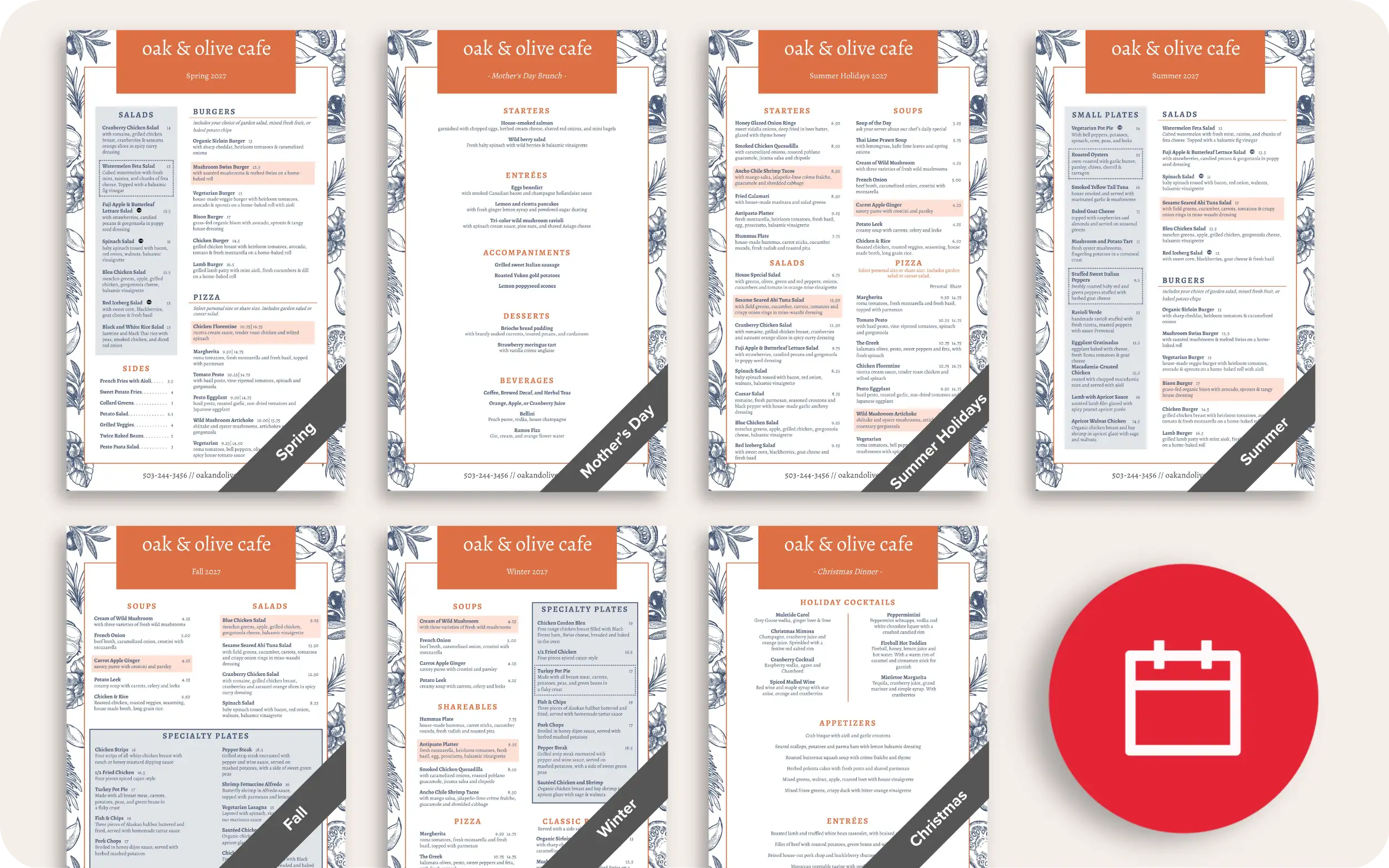
The menu sits at the center of any hospitality business, representing the intersection of business inputs, marketing strategy, and the customer experience. Every menu change represents some adjustment, however big or small, in these factors. Studying menu changes over time tells you whether your efforts are helping or hurting.
This leads to real understanding. Imagine a simple query - Based on the menu cycles we've run over the past few quarters, what should we change next quarter? A genuinely useful answer is becoming possible from AI. To get there, every menu change must be captured as a collection of decisions and results.
The secrets of restaurant success live in the menu:
What changed in an item? Why did the item change? How was the change positioned/marketed? What happened to customer attention on that item? How were sales affected?MustHaveMenus as a Platform for Intelligence
MustHaveMenus is the system of record for menu data — where versions, approvals, channel states, pricing history, and compliance trails accumulate. That history is the raw material intelligence runs on.
The operators updating menus on this foundation are the ones who'll have something worth reasoning about later. Those using many point solutions will have gaps in their understanding. And these gaps won’t hold steady. They’ll widen, every cycle.