



Restaurant menus are managed the same way they were 30 years ago — and it's costing operators time and money they can't afford to waste. AI promises improvements with automation and intelligence, but these need a proper foundation. For hospitality marketers, we believe this means turning the menu into a more automated and intelligent merchandising system.
The Menu as Merchandising System
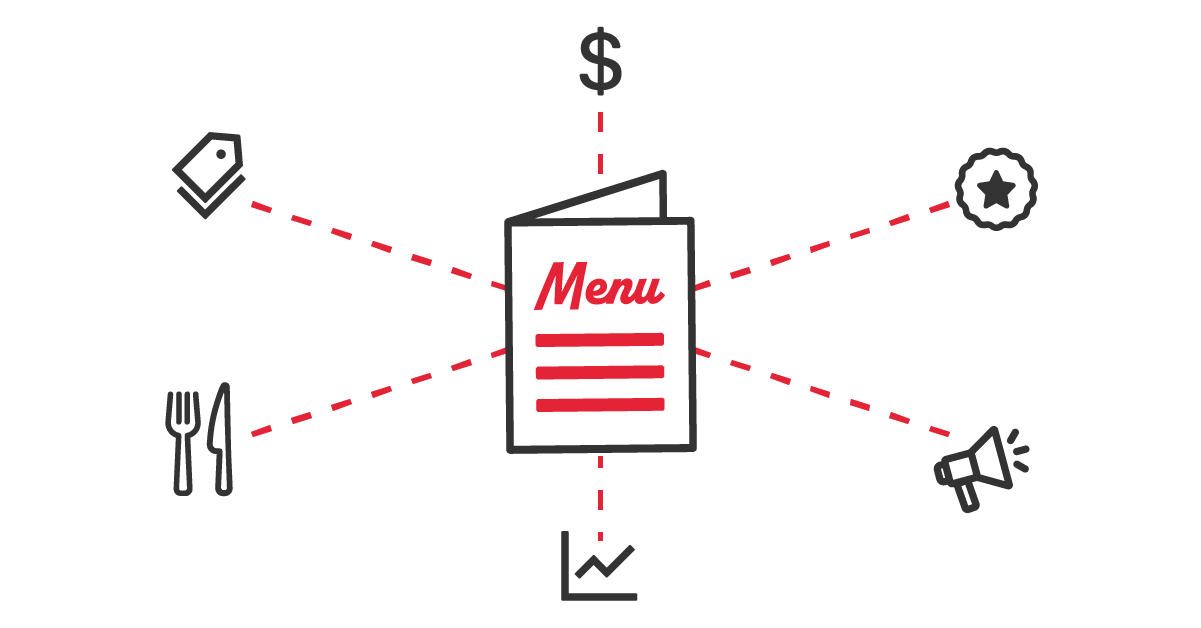
The menu is a merchandising powerhouse, bringing together product, prices, costs, promotional emphasis, brand identity and more to achieve business goals: growing revenue, lowering costs, increasing average check, etc.
Most menus go through planning cycles to reflect new business strategy and seasonal variations. Think of the classic menu engineering labels: stars, puzzles, plowhorses and dogs. The next menu cycle may eliminate the dogs and try to elevate the puzzles through promotional shifts to see if they can become stars. Or think of a summer menu cycle that highlights seasonal ingredients like heirloom tomatoes, berries, peaches, and fresh basil.
What Centralized Menus Already Deliver
Historically, menu updates are slow, manual processes over fragmented systems. MustHaveMenus customers are showing that simply governing local menu changes from a central hub can speed menu update time by 70% (in the case of Jose Andres Group) and save as much as $100,000 per year on costs (as seen by both Jose Andres Group and Charlie Palmer Collective).
The AI Unlock
 Designer and stakeholder hours, including version and file management Menu cycles capture what changed, who changed it, and why Design and data together — MustHaveMenus sees the whole system Omnichannel publishing turns menus into live marketing assets The only platform that can benchmark menu performance across comparable businesses
The Vision: Menu Cycles
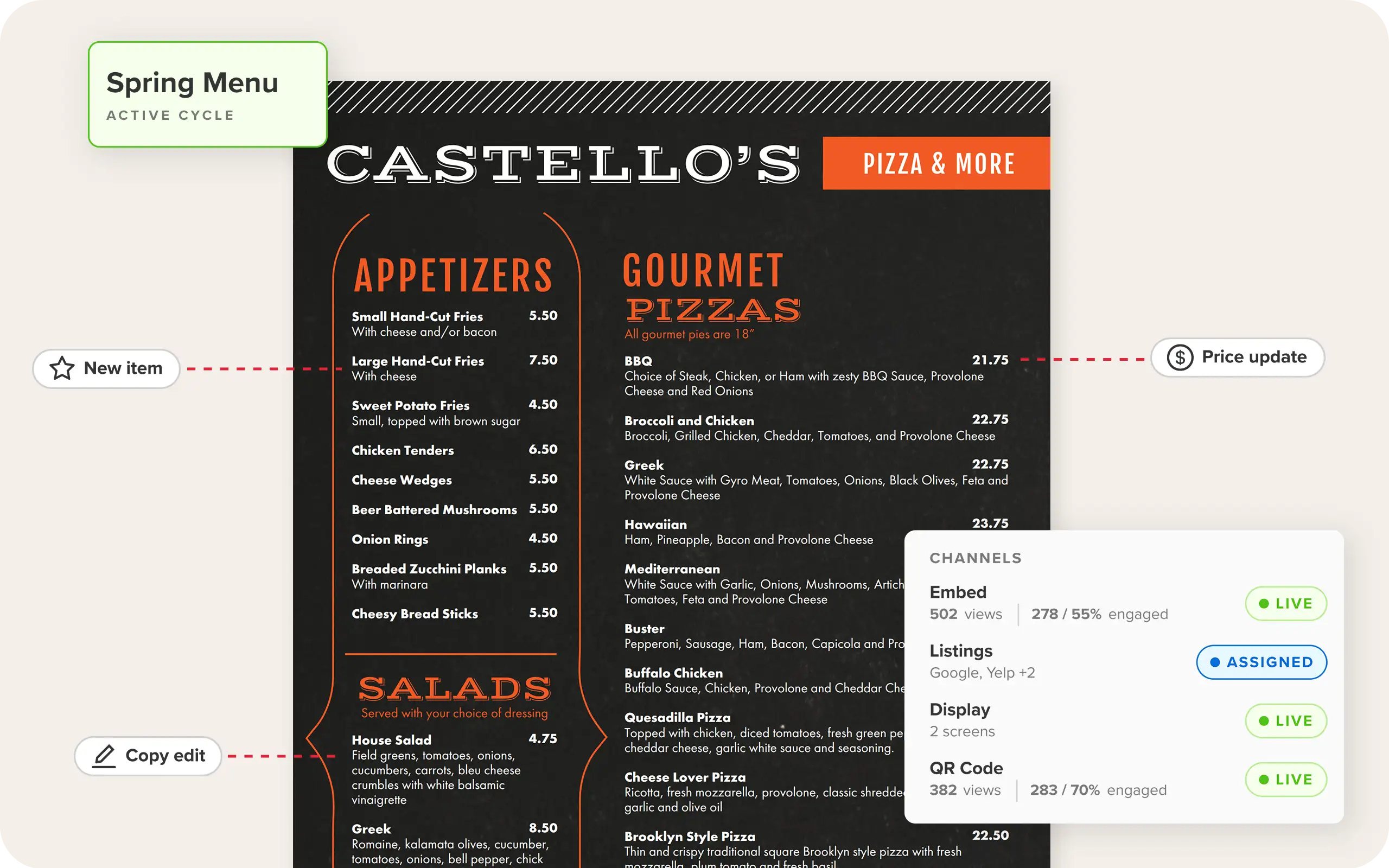
That's the baseline. Our vision for menu cycles takes this further, into the menu planning effort, adding the calendar framework of menu cycles to give context to menu changes. Each menu cycle will capture not just the data and design changes, but who made them and when. We'll add reason tagging so significant changes, like price increases, get stored with the intent behind the change.
Menu cycles will enable greater teamwork. Operators can make changes to secure brand templates in data-only mode. Marketing and F&B teams can see change logs and approve or reject changes. Comments can be added by anyone.
Omnichannel Publishing
MustHaveMenus sees menu cycles as only half the challenge for restaurant marketers. The other half is getting menus where they need to go with minimal effort. With the addition of our new Listings product, we are expanding our options for automated publishing into key menu channels: digital signage, QR codes, restaurant websites, and publisher networks.
The Intelligence Layer
MustHaveMenus is one of the only platforms capable of understanding this whole system - how menu design and data changes combine to produce results. This is where we are putting our greatest effort and investment as a company.
As we capture menu cycle data over time, we’ll connect performance insights from the marketing channels. Then we’ll attach transaction data from the POS and input data from the inventory system. Over time, marketers will gain valuable insights: not just the results and trends from their own merchandising efforts, but how they size up with comparable businesses.
The AI Roadmap
For MustHaveMenus, this is the essential AI roadmap - a unified platform with efficient workflows and growing intelligence. With this foundation, innovations like chatbot menu updates and AI promotion suggestions will be more reliable and effective.